


While in Honnavar two moths back, while on a walk near Sharavati river, I inhaled some rare and sweet aroma and at once I recognized as the long forgotten smell of efflorescence of cashew flowers. Now after two moths the delicious tender nuts will be available. After another month or two, the sweet-sour-pungent cashew fruit (actually pods) and fully-grown cashew nuts will be ready for cutting. I remembered my schooldays. Those were summer holidays in Gokarn town. Along with other girls I used to venture into cashew groves that lined the beach. We used to search the trees in groves stealthily whose branches bent so low that we were not seen. If we were lucky, we could pounce at the hidden one or two red and yellow fruit. At home we bought green and pealed cashew nuts, which had peculiar sweet taste. These tender cashew nuts were removed from unripe pods, pealed and sold on leaves, 20 pieces for an anna. (then 1/16th of a rupee) Later really grown and pealed nuts appeared in the market.
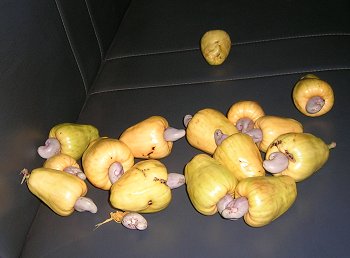
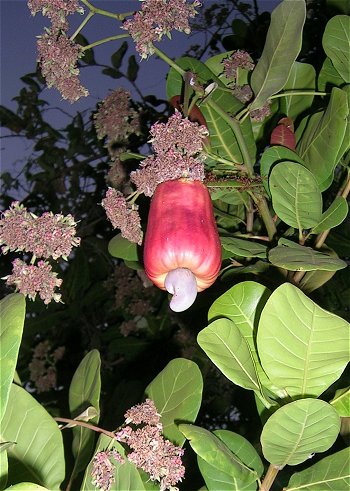
"You Konkanis are rich people! You gobble cashew nuts in curry form (upkari) like brinjal (eggplant) or bhendi (Lady"s Finger) we cannot even afford a fistful for Payasam for twenty people on Diwali day!" exclaimed a friend from Dharwad. It was due to easy availability than effordability in olden days. Transport facilities were rare and the poor owners of self-grown cashew groves could hardly visualize the immense possibilities cashew as cash crop 60 years later! The price of dried, pealed and processed cashew-nuts (godambi) is hundred times more now.

Cashew nut is not native to India. It does not figure in ancient cookery books. The Portuguese brought it from Brazil to Goa in the 16th century. Very soon it spread to coastal district of Indian subcontinent. It is grown in other salubrious regions as well. Costal belt of Maharashtra, Karnataka, Kerala, Andhra and Tamilnadu also produce this tasty nut. The fruit is extensively used in Goa to prepare the famous liquor Fenny, which is sweet, bitter and pungent and declared to be "heady". Some say that persons used to fenny, can hardly relish any other beverage.
The Global demand for cashew nut is huge. Salted nuts are ideal company to beer and other drinks. The gourmets want nuts in all Indian savories, sweet, salty or bland. Nowadays more and more land is used for cultivation of cashew, though erratic climate at times hits the crop at efflorescent stage itself.
The thick and hard shells of the cashew nut make excellent oil which controls humidity and wood decay. It is extensively used to apply to native boats and fishing trawlers which have to be anchored for a long time or get stranded in salt-water.
Earlier human fingers were used to break the nuts and peal the brown skin, which affected badly the women laborers" hands. Nowadays machines are used for breaking and peeling. But sorting is still done by the nimble fingers of Konkani girls.
Indians are supposed to be conservative and traditional in food habits. But the way they use Chilly, Potato, Tea, Coffee, and cashews belies that supposition. Cashew is the King in the Five Star Hotels or at Wedding feast, and all time savories.