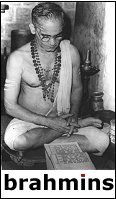


Badaganadu Brahmins
First Online: September 04, 2023
Page Last Updated: September 02, 2026
# Badaganadu Brahmin Community The Badaganadu Brahmin community is a sub-sect of Kannada-speaking Smartha Brahmins, traditionally concentrated in the southern Indian state of Karnataka, particularly in districts like Shivamogga, Chitradurga, Davanagere, and surrounding regions. The name "Badaganadu" is derived from "Badaga" meaning north in Kannada, referring to their ancestral migration from northern parts of Karnataka and surrounding areas into the central regions of the state. They are followers of the Smartha tradition established by Adi Shankaracharya, which emphasizes the worship of five principal deities—Shiva, Vishnu, Shakti, Ganapati, and Surya—under the Advaita Vedanta philosophy.
Historically, the Badaganadu Brahmins have been known for their strong emphasis on education, scholarship, and administrative service. Many in the community played significant roles in fields like teaching, government service, and later in medicine, law, and engineering. They have also contributed to Kannada literature and cultural development. Today, while the Badaganadu Brahmins have dispersed across India and abroad, they maintain strong community networks through cultural associations and mutual support organizations. These associations not only preserve traditional practices and festivals but also promote social welfare, educational scholarships, and community bonding among younger generations.
The cultural practices of the Badaganadu Brahmin community are rooted in Vedic traditions, but they also reflect strong regional Kannada influences. Rituals such as upanayana (sacred thread ceremony), gruhapravesha (housewarming), and shraddha (ancestral rites) are observed with meticulous adherence to Smartha customs. Festivals like Ganesh Chaturthi, Navaratri, Deepavali, Makar Sankranti, and Yugadi are celebrated with devotion and community gatherings. Many families also continue the tradition of daily sandhyavandana (prayer at sunrise and sunset), recitation of Vedic hymns, and worship of household deities. Temples dedicated to Shiva, Vishnu, and Devi hold special importance, reflecting the Smartha principle of reverence to multiple forms of the divine.
Marriage traditions in the community emphasize cultural continuity and adherence to Vedic rites. Weddings are elaborate affairs marked by rituals such as kashi yatra, kanyadana, mangalya dharana, and saptapadi (seven steps around the sacred fire). Traditionally, marriages were arranged within the community to preserve cultural and linguistic identity, though modern times have seen a blend of tradition and personal choice. Food customs during such ceremonies reflect a rich vegetarian cuisine rooted in Karnataka's culinary heritage, including dishes like puliyogare, chitranna,kosambari, and payasa.
The Badaganadu Brahmin community also maintains cultural associations, such as the "Badaganadu Sangha" in Bengaluru and other cities, which organize annual gatherings, religious discourses, educational initiatives, and matrimonial meets. These associations play a vital role in connecting dispersed families, preserving traditions, and providing scholarships and aid to community members in need. Thus, while adapting to modern professions and lifestyles, the Badaganadu Brahmins continue to uphold a strong sense of identity and cultural pride.
Some Signature Dishes of Badaganadu Brahmin Community
-
Bisibelebath
-
Iyer Kootu
-
Taravari Payasa
See Also: