


This situation misled the British Officers to conclude, based on a national survey conducted in early 19th century, that India was an illiterate country with no school-building and teaching arrangements. British system of education was introduced to train Indians to become scribes and assistants to help the rulers. Gandhiji's observations, at the London Round Table Conference in 1931, that India became more illiterate after British took over, is a harsh statement of fact.
I myself studied second standard in a temple-school hall, in the town of Hirekerur in (Dharwad district, Karnataka); it was a fairly common custom. But rarely do we come across such schools whose history could be traced back by a few hundreds of years.
In my doctoral thesis on education, I have mentioned that Heggade Ereyanna, an official of the Hoysala king, Vira Ballala II, established a Kannada School in 1174 CE in Murundi near Arasikere in the premises of a Narasimha temple. He built a hall, and appointed a teacher, Soviyanna, to teach through Kannada (Karnatabala shikshe). Boarding arrangements for twenty students was done with a female cook on-staff. These details which also include emoluments for the Teacher and the cook are mentioned in a stone inscription, installed in the Narasimha temple.
In 1975, the old temple building collapsed leading to the discovery of three sheets of a copper inscription confirming a big grant for the same school, in 1222 CE. This donation, without doubt, enabled temple administration to run the school for centuries.
Villagers confirmed that the school continued in the same temple premises (of course, with modern syllabus!), till 1975, when it was shifted to nearby town of Nittur.
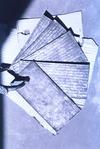
This newly found copper plate inscription confirms that the school building established in 1174 CE was in working condition till recently, that is for eight hundred years! Many village temple school buildings might be having such hidden history.
Traditions do not die easily. A new find here and there can help trace the history of a temple school, an agrahara or a matha by centuries. But copper metal has become a rarity. Unscrupulous and illiterate persons, who stumble on invaluable source of history like copper-plates may get them melted for petty gains. An important historical record gets lost forever.

• The History of History of India